
Book Review

Strengthening the Women, Peace and Security (WPS) Agenda Through Local Wisdom

Author: Ramita Paraswati

Think Globally, Act Locally: A Way to Strengthen Women, Peace and Security Through Local Wisdom

One unforgettable moment occurred in Tebet, Indonesia, on September 28, 2022, when a mother named Niken Prameswari dispersed a group of students about to engage in a violent brawl using nothing but a broom. A year later, a similar act of courage occurred in Curug, Serang City, when another woman, Nurjanah, used a laundry bamboo stick to disperse students with the same violent intent. These actions successfully thwarted the plans of these students to initiate a brawl.

These actions by Niken and Nurjanah achieved at least two significant outcomes. First, they prevented potential casualties. According to several national news sources, student brawls have previously resulted in fatalities. The loss of even one life is a devastating blow to the victim’s family. Second, they helped prevent material damages. During such violent events, private and public property often becomes collateral damage due to heightened emotions and loss of control. Thus, student brawls can cause both moral and material losses to individuals and communities alike.

What Niken and Nurjanah did were acts of individual initiative. Despite highlighting the popular phrase “The Power of Emak-emak” (mothers’ power), no collective action emerged from other women in their communities. In Nurjanah’s case, although she asked neighbors to report the incident to the police, no report was ultimately made, according to local authorities. This indicates a lack of collaboration, especially among women, to address conflict within their communities.

These incidents, however, illustrate that women can play a crucial role in preventing conflict in their surroundings. This resonates with the global agenda that promotes women’s involvement in peacebuilding, initiated through the adoption of UN Security Council Resolution 1325 in 2000. The resolution emphasizes four key pillars: participation, protection, prevention, and relief and recovery. On a regional level, ASEAN has endorsed the Women, Peace and Security (WPS) agenda since December 5, 2022. In Indonesia, the second phase of the National Action Plan for the Protection and Empowerment of Women and Children in Social Conflicts (RAN P3AKS) is currently underway.

It’s important to note that conflict is no longer confined to the domain of war. It can also emerge from non-traditional security threats such as climate change, food and nutritional insecurity, environmental degradation, disaster response, healthcare access, and more. Addressing these requires systematic strategies and inclusive participation, especially from grassroots communities.

In this context, rural women hold immense potential to drive the WPS agenda forward. Away from the complexities of metropolitan life, rural environments foster collective action through mutual cooperation or gotong royong. For instance, in various villages around Solo, Central Java, there are several women’s groups that, if structurally empowered, could serve as effective models for other regions even across national borders. This grounds the WPS agenda in local values and practices.

Social Sector

Monthly social gatherings known as arisan (rotating savings groups) are common among rural women. These gatherings are more than financial arrangements; they serve as spaces for social bonding and community harmony. There are also “goods arisan” like arisan nyapu, where pooled resources are used to buy communal items like brooms or cooking utensils for events such as weddings or Eid celebrations. These activities foster social cohesion and serve as a resource base for communal needs.

Health Sector

Women’s groups, particularly those under the Family Welfare Movement (PKK), play a pivotal role in public health and empowerment. They coordinate regular posyandu (integrated health services) for infants and the elderly, inviting healthcare workers to provide checkups. There are also weekly or bi-weekly fitness programs for seniors, and some women join sports clubs like Kartini or Gendhis badminton groups. When someone falls ill, instead of visiting individually, the group pools money to support the sick, easing the family’s financial burden.

Economic Sector

Rural women’s groups also advance economic independence through several initiatives. First, they are educated on medicinal plants, encouraged to grow them in their yards for easy access. Second, to support household food security, they are taught to grow vegetables using available land or polybags. The government often supports this with seed distribution. Third, these women are trained in entrepreneurship—learning how to process, package, and market their products, such as taro chips in Putatan village, targeting neighboring villages through word of mouth. These efforts boost both food resilience and entrepreneurial skills.

Religious Sector

Almost every village has a women’s religious study group. Held weekly in local prayer spaces or rotating homes, these gatherings strengthen both spiritual life and social ties. Occasionally, they organize larger-scale events or communal pilgrimages, fostering inter-personal relationships and enhancing shared values of peace based on religious teachings.

Cultural Sector

Women are central to organizing cultural traditions such as sadrananan, suronan, pitonan, and selametan. They prepare traditional dishes and help coordinate events. While some view these traditions as spiritual offerings, many now see them as cultural practices fostering tolerance and pluralism. Prayers used in these ceremonies are Islamic, said in Javanese for accessibility, and imbued with values of gratitude. They also help promote the use of local ingredients, further reinforcing local food security.

Action Plan and Policy Implications

These rural women’s initiatives are not unique to Solo and can be found across Indonesia. This indicates fertile ground for the implementation of the RAN P3AKS strategy. The key is to integrate national-level technical directives with existing local values.

Several points must be addressed:

  1. Localization of RAN P3AKS into regional regulations is essential. As of now, only a handful of provinces have adopted regional action plans (RAD), including East Java, Lampung, Bengkulu, West Kalimantan, Central Sulawesi, NTB, NTT, Papua, and Central Java. More provinces should be encouraged to follow.
  2. A structured monitoring and evaluation mechanism must be established to ensure effective implementation and accountability.
  3. RAN P3AKS working groups (Pokja) should collaborate with village-level PKK groups, incorporating WPS-related values into training and activities to enhance reach and effectiveness.

By addressing these points, the WPS agenda can become a lived reality for women in rural areas allowing them to contribute directly and collectively to national peacebuilding, particularly in mitigating non-traditional security threats. This way, isolated acts of bravery, such as those seen in student brawl interventions, can transform into coordinated community peace efforts.

References:

AMAN Indonesia. (2023, April 5). AMAN Indonesia Gelar Konsolidasi Masyarakat Sipil RAN P3AKS. Retrieved from AMAN Indonesia: https://amanindonesia.org/2023/04/05/aman-indonesia-gelar-konsolidasi-masyarakat-sipil-ran-p3aks/

Goldstein, J.-J. of G. S., & 2016, undefined. (n.d.). Climate change as a global security issue. Academic.Oup.Com. Retrieved May 22, 2023, from https://academic.oup.com/jogss/article-abstract/1/1/95/1841791

Homer-Dixon. (1994). On the threshold: environmental changes as causes of acute conflict. Muse.Jhu.Edu. https://muse.jhu.edu/pub/6/article/447281/summary

Komnas Perempuan. (n.d.). Komnas Perempuan. Retrieved March 15, 2024, from https://komnasperempuan.go.id/keputusan-paripurna-detail/surat-keputusan-paripurna-no-004-skp-iv-2021-keputusan-v-rencana-aksi-nasional-p3aks-perlindungan-perempuan-dan-perlindungan-anak-dalam-konflik-sosial

Lobasz, J. K. (2009a). Beyond border security: Feminist approaches to human trafficking. Security Studies, 18(2), 319–344. https://doi.org/10.1080/09636410902900020

Mg-Audindra. (n.d.). Hebat! Ibu di Serang Bubarkan Tawuran Pelajar Pakai Bambu Jemuran | BantenNews.co.id -Berita Banten Hari Ini. Retrieved March 15, 2024, from https://www.bantennews.co.id/seorang-ibu-di-serang-bubarkan-tawuran-pakai-bambu-jemuran/

Paris R. (2001). Human security: paradigm shift or hot air? JSTOR. https://www.jstor.org/stable/3092123

Ross, M. L. (2004). What do we know about natural resources and civil war? Journal of Peace Research, 41(3), 337–356. https://doi.org/10.1177/0022343304043773

Shepherd, B. (2012). Thinking critically about food security. Http://Dx.Doi.Org/10.1177/0967010612443724, 43(3), 195–212. https://doi.org/10.1177/0967010612443724

SINDO News. (n.d.). Berita Tewas Tawuran Terkini dan Terbaru Hari Ini – SINDOnews. Retrieved March 15, 2024, from https://www.sindonews.com/topic/49718/tewas-tawuran

UN Women. (2022, December 5). ASEAN launches plan to promote women’s security in Southeast Asia. Retrieved from UN Women: https://asiapacific.unwomen.org/en/stories/press-release/2022/12/asean-rpa-wps-launch

Widyastuti, P. R. (n.d.). Aksi Ibu-ibu Bubarkan Pelajar Tawuran, Bawa Sapu Ijuk Sambil Ngomel, Mengaku Malu Tindakannya Viral – Halaman 2 – TribunNews.com. Retrieved March 15, 2024, from https://www.tribunnews.com/metropolitan/2022/09/28/aksi-ibu-ibu-bubarkan-pelajar-tawuran-bawa-sapu-ijuk-sambil-ngomel-mengaku-malu-tindakannya-viral?page=2 Women Preventing Countering Violent Extremism. (2023, December 29). Tradisi Sadranan, Mengungkap Kerja Perempuan dan Merawat Toleransi. Retrieved from Women Preventing Countering Violent Extremism: https://womenandcve.id/blog/2023/12/29/tradisi-sadranan-mengungkap-kerja-perempuan-dan-merawat-toleransi-2/

Note: This article is an English translation of the original Indonesian article titled “Menguatkan Agenda Women, Peace and Security (WPS) Melalui Kearifan Lokal”, published in the book “Membangun Inklusi: Gerakan, Kontestasi, dan Tradisi”, UIII Press, 2024. ISBN: 978-623-10-5293-3.

Strengthening the Women, Peace and Security (WPS) Agenda Through Local Wisdom Read More »
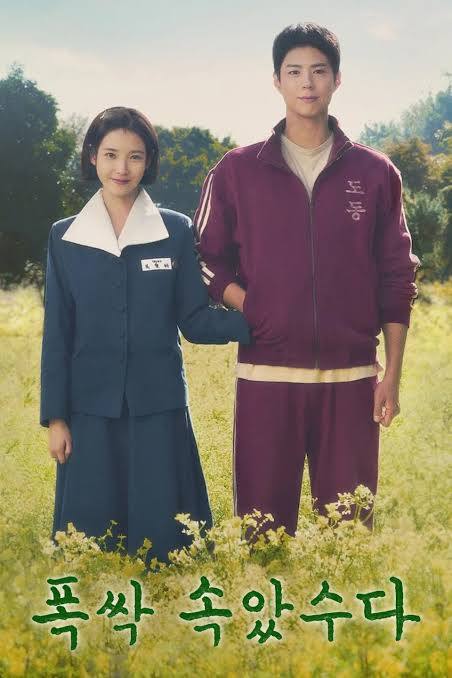
Film Review : When Life Gives You Tangerines

First broadcast: March 7, 2025 (South Korea)

Episodes: 16

Genre: Drama, Slice of Life, Romance

“Drama means: you tried your best.”

This sentence best encapsulates the gist of the Korean drama When Life Gives You Tangerines that was released on Netflix on March 7, 2025. Featuring IU, Park Bo-gum, Moon So-ri, and Park Hae-joon, the drama presents a heartfelt and emotionally gripping narrative based on solid writing and understated acting. It is more than just a tale of love and family, for this series is a portrait of women’s intergenerational struggles of resisting deeply embedded patriarchal structures in South Korea.

Unlike most Korean dramas, When Life Gives You Tangerines releases four episodes a week, each “volume” of which addresses a theme of loss, loss of a mother, child, lover, or ultimately, a spouse and father. But what truly distinguishes this drama is the manner in which it weaves feminist themes into the ordinary lives of its characters with honesty and subtlety.

Here’s why this drama is worth your attention from a feminist point of view:

1. Struggles of Women within a Patriarchal System

The first volume illustrates how Ae-sun’s mother, though under economic duress, becomes a sea diver in order to support her children. Gender discrimination is just as blatant in Ae-sun’s childhood, she is picked to be class vice president simply because she is a female, and later expelled from school for bad behavior compared to boys who are guilty of the same. Instead of being defeated, Ae-sun stands up to discrimination and then becomes an activist, claiming her rights in political and social contexts.

2. Gendered and Class-Based Discrimination

Yang Geum-myeong, as an adult man, is embarrassed by his girlfriend’s mother due to his lowly background. But the drama demonstrates his emotional integrity and dignity and introduces us to a woman who refuses to be determined by class or social status.

3. A Love Story Based on Equality

Ae-sun and Gwansik’s love life is a wholesome spin on relationships. Gwansik is not just a supportive partner, incidentally, he’s also a feminist ally. By insisting, “She’s not here to become your daughter-in-law,” he’s actively rejecting patriarchal domestic norms and safeguarding Ae-sun from the crushing expectations placed on women upon marriage.

4. Economic Empowerment for Women

Ae-sun’s grandmother invests her savings not in buying a house, but in buying a boat, a more economically productive item. This move underscores the importance of letting women exercise strategic financial decisions and defies the concept that a house is the ultimate sign of financial success.

5. Loss and the Will to Continue

The. death of a child is most likely the most devastating thing that can happen to any mother or father. But drama, again reminds us that life just keeps going, for those who need to go on. Ae-sun and Gwansik’s resilience in the midst of loss is demonstrated. not as emotional toughness, but stoic strength.

6. It’s Never Too Late for a Woman to Dream

The play highlights that women’s ambitions never grow old. Ae-sun writes a poetry book in her advanced age, proof that ambition and creativity are not the monopoly of youth, and that women can reclaim their dreams at any age.

7. Women Need Women

A poignant moment shows Ae-sun’s mother asking her mother-in-law to accompany her for a funeral photo shoot. This unstated request shows how even as mothers, women still look to maternal figures for emotional sustenance. Similarly, Geum-myeong, being in his thirties, still calls on his mother for help in taking care of his child, demonstrating the ongoing need for care and nurturing.

8. Parental Sacrifice as an Act of Love, Not Martyrdom

Ae-sun and Gwansik sell their house so that their daughter can study abroad. Rather than sentimentalizing sacrifice, the drama presents it as a deliberate act of love, something that recognizes the intergenerational cost of building a better future.

9. Parents Are Still Learning Too

The play depicts parenting as a lifelong process of discovery. There is one such agonizing moment when Ae-sun says, “Your father didn’t live for himself.” It’s a heart-wrenching reminder that parents always put themselves last, and that their emotional burdens are overdue recognition and pity.

When Life Gives You Tangerines is more than a family or romance drama, it’s a richly feminist tale of survival, resistance, and love that crosses generations. By highlighting everyday injustices and acts of strength, the show makes a strong case for gender justice, emotional truth, and rethinking what it means to be fully, authentically alive.

Some Quotes from this Drama
  1. “You can be ruined if you’re obsessed with status.” — Gwang Rye
  2. “When the time comes, all of this hardship will seem trivial, and I’ll be able to laugh about it.” — Gwang Rye
  3. “There will be tough days in your life. One day, life will feel so heavy that you’ll want to die. Don’t just lie there. Fight with all your might.” — Gwang Rye
  4. “I’d rather die earning money than die begging.” — Gwang Rye
  5. “I heard arrogance comes from emptiness. Maybe I shop so much because I grew up in poverty.” — Geum Myeong
  6. “It’s not life that’s evil, but money.” — Ae Sun’s Grandmother
  7. “Tell yourself that you won’t die and must survive no matter what. Swing your arms and legs with all your strength. You’ll come out of the dark sea and see the sky.” — Gwang Rye
  8. “The neighbors don’t know anything. Don’t listen to them.” — Oh Ae Sun
  9. “With 100 hwan a day, I just want to let my mother rest.” — Oh Ae Sun
  10. “I’m the one who’s poor, not you. Don’t stay still. Live your life to the fullest.” — Gwang Rye
  11. “All parents want their children to be loved more than anyone else.” — Gwang Rye
  12. “Today, my mother passed away, but I already missed her.” — Oh Ae Sun
  13. “In the end, all parents will die. Even if parents pass away first, the children must continue living. Life goes on.” — Gwang Rye
  14. “Parents think about what they couldn’t give, while children think about what they couldn’t get.” — Geum Myeong
  15. “I want to fly higher, but something holds me back. Guilt. The higher I want to fly, the greater my guilt becomes.” — Geum Myeong
  16. “I love her simply because she is my mother. There’s no other reason.” — Oh Ae Sun
  17. “Mother found her own happiness. There were bright moments in her life too. She had many beautiful times. I just want you to know that her life was also valuable.” — Oh Ae Sun
  18. “Talking to others is like writing a love letter. I carefully choose every word. When someone helps me even just once, they become my savior. But I treat the real savior—my parents, whom I owe everything to—like old paper. I’m not careful with my words or feelings with them.” — Geum Myeong
  19. “Dad always gave me more than he had. I wouldn’t trade him for the richest man.” — Geum Myeong
  20. “I can’t give you everything. But there’s one thing I will do for you, no matter what.” — Yang Gwan Sik
  21. “There’s no warm place in this world that would accept me. The only person who cares about me in this world is Yang Gwan Sik.” — Oh Ae Sun
  22. “There’s nothing in life you can take back. If your life and mine become one, then we’ll stay together—alive or dead.” — Oh Ae Sun
  23. “We may go through days of hunger, but you will never break my heart.” — Oh Ae Sun
  24. “Can love pay the bills? When people go hungry, they start to hate each other.” — Byeong Cheol
  25. “Do you know why I married Yang Gwan Sik? The most hopeless man in Jeju? Because he’s like steel.” — Oh Ae Sun
  26. “Mother, Grandma, Ae Sun came to live with me, not to be your daughter-in-law.” — Gwan Sik

Source: https://www.popbela.com/relationship/single/natasha-cecilia-anandita/kumpulan-qoutes-menyentuh-dari-drakor-when-life-gives-you-tangerines?page=all

Film Review : When Life Gives You Tangerines Read More »

Book Review – Perempuan Perdamaian: Adopsi Resolusi 1325 di Indonesia

Authors: Adriana Venny, Irine H. Gayatri, Dwi Rubyanti K.

This book elucidates the historical implementation of the UNSCR 1325 on WPS in Indonesia. Written by three swordswomen on WPS (Andriana Venny, Irine H. Gayatri, and Ruby Kholifah) from Indonesia, the book that was published in 2022 depicts the dynamic process of a gender-based violence coalition in absorbing inspiration from the region, strengthening support base, diplomacy surrounding the UNSCR 1325. Following this, the authors also illustrate the implementation of the National Action Plan (NAP) for the Elimination of Violence against Women in Indonesia. More interestingly, this is the first book that discusses the relationship impact of conflict on women, including sexual violence as a tactic of war and cases of violence against women in conflicts in Indonesia. Thus, the researcher who is interested in researching WPS can cite this book as the primary resource to analyze the empirical studies of the implementation of WPS in Indonesia.

In the first chapter, the writers describe a general view of conflict and its impact on women. The overview and the data on the world’s impact of conflict on women were well explained. This point also illustrates how women were used as a war tactic. So, it is not only suggested the double burden of women’s condition during the conflict period. Considering this situation, an urgent policy is required to save and encourage women’s involvement in the peace agenda. Chapter 2 discusses the relevance of the UNSCR 1325 for Indonesia. Conflict contexts in the sub-national include the dynamic process, and its obstacle to adopting the resolution on WPS was the main topic in this part. In addition, to obtain a more comprehensive understanding of the empirical studies in Indonesia, this chapter also explores the national contestation relating to the conflict issue and the meaning of preventive action in conflict. Further, the supra-states and neighborhoods’ role in encouraging the NAP in Indonesia is also a crucial issue in Chapter 2.

The next chapter focuses on the explanation of the substance of Rencana Aksi Nasional Perlindungan dan Pemberdayaan Perempuan dan Anak dalam Konflik Sosial (RAN P3AKS – the Indonesian NAP). The crucial discussion is the national regulation (Peraturan Presiden no. 18, 2004), which describes the categorization of violence against women and children, the main pillar of its implementation, and the coordination process. The fourth chapter describes the localization and decentralization of NAP in 15 provinces in Indonesia. To note the crucial conflict region, it also mentions the post-conflict approach for the vulnerable area. The interesting sub-chapter should be noted to engage civil society in the program and the preventive action of extremism integration in RAN P3AKS. To conclude, this chapter also provides the lesson learning and challenge of this national agenda.

The last chapter analyzes the relationship between UNSCR 1325 and other human rights norms such as CEDAW and Beijing Platform Form for Action (BPFA). Responsible to Protect (R2P) is one of the concerns of this chapter as well, which emphasizes the global commitment to end detrimental conflicts like genocide and Sexual gender-based violence. More importantly, a huge obstacle in governmental institutions is the “Cross-sectoral ego.” The egocentric institutions that do not have a single program each other become a vital challenge to implementing RAN P3AKS in Indonesia.

The strength of this book is that it provides historical documentation of the adoption of WPS in Indonesia, a comprehensive analysis with an explanation and use of a deep analysis of the topic, and political endorsement from authority and nongovernmental organizations, a vital analysis of gender violence and the urgency of WPS lens to response the extremism, and correlating the relevance of international norms of human rights. This book is also easy to understand, so the reader can enjoy reading it even though they are unfamiliar with the topic. However, since the actors wrote this book of the first era of RAN P3AKS implementation, some views will seem subjective in depicting the flourishing of this agenda. Albeit, as the reader, this book will strengthen and encourage the reader to understand the purpose of the WPS agenda. To some extent, it also illustrates that to achieve the equal contribution on peacebuilding between women and men need long journey and support from government, non-government organization and grassroot activist.

Link to download the book : https://amanindonesia.org/publikasi/perempuan-dan-perdamaian-adopsi-resolusi-1325-di-indonesia/

Book Review – Perempuan Perdamaian: Adopsi Resolusi 1325 di Indonesia Read More »

Scroll to Top